
AI-Powered qualityinspection: supporting the Circular Use of Recycled Carbon Fibre
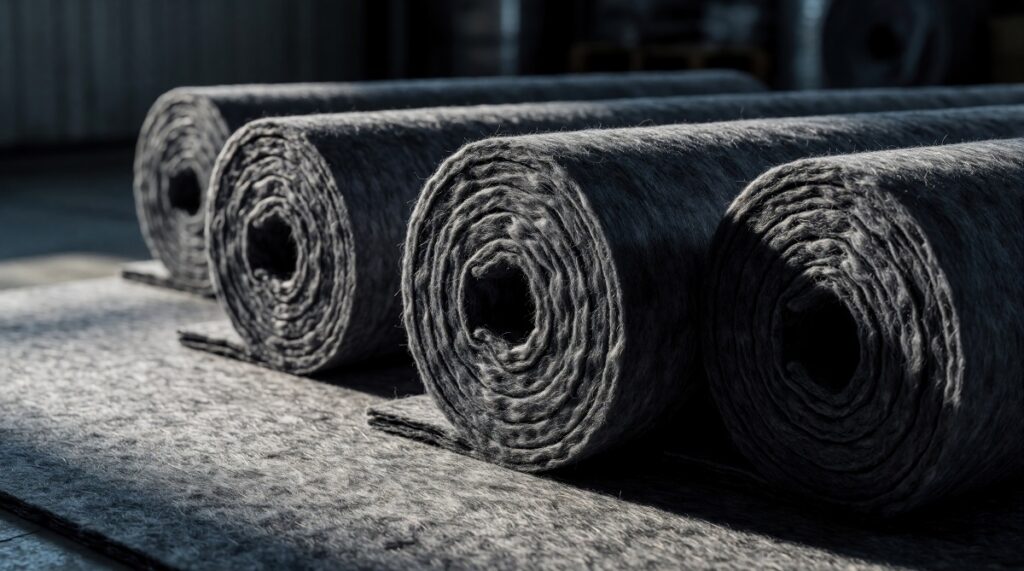
How can artificial intelligence help turn recycled composite materials into reliable resources for future manufacturing? A research contribution on automated inspection of recycled carbon fibre fabrics offers an interesting perspective on this challenge.
High-quality materials are essential for the successful remanufacturing of components, particularly in demanding sectors such as aerospace and automotive. As the use of recycled composites grows, ensuring consistent material quality and identifying potential defects become increasingly important.
The research paper AI-Based Inspection of Recycled Carbon Fibre Fabric explores how advanced vision-based sensing and artificial intelligence can support automated quality inspection during the production of carbon fibre fabrics.
The proposed approach relies on a modular vision-based sensor capable of capturing different image modalities, including information about material reflectance and fibre orientation. AI-based data analysis is then used to segment and classify typical manufacturing defects. The sensor concept can also be extended to scan the full width of industrial fabric production lines.
A key aspect of the work is its focus on recycled carbon fibre materials. Compared with conventional fabrics, woven and nonwoven recycled materials can show greater visual variability. The research therefore investigates how inspection methods can take these characteristics into account when detecting and classifying defects.
Why is this relevant to COMPASS?
The work addresses a challenge that is closely connected to the ambitions of the European COMPASS project: enabling the more effective reuse and remanufacturing of composite materials through advanced technologies and digital tools.
COMPASS aims to extend the lifetime of sheet metal and thermoplastic composite components by developing remanufacturing processes supported by digital information, component traceability and quality assessment. In this context, reliable inspection and defect identification are important elements in understanding material and component conditions and supporting decisions on their next use.
AI-based inspection approaches such as the one presented in this publication demonstrate the potential of combining advanced sensing, image processing and data analysis to improve knowledge of material quality. These capabilities are particularly relevant to the broader transition towards data-driven, resource-efficient and circular manufacturing.
By making the dataset and sample code openly available, the work also provides useful resources for further research and development in automated material inspection.
Discover the dataset and research contribution:
https://doi.org/10.5281/zenodo.11203952
The Zenodo record acknowledges EU funding under the MC4 project.